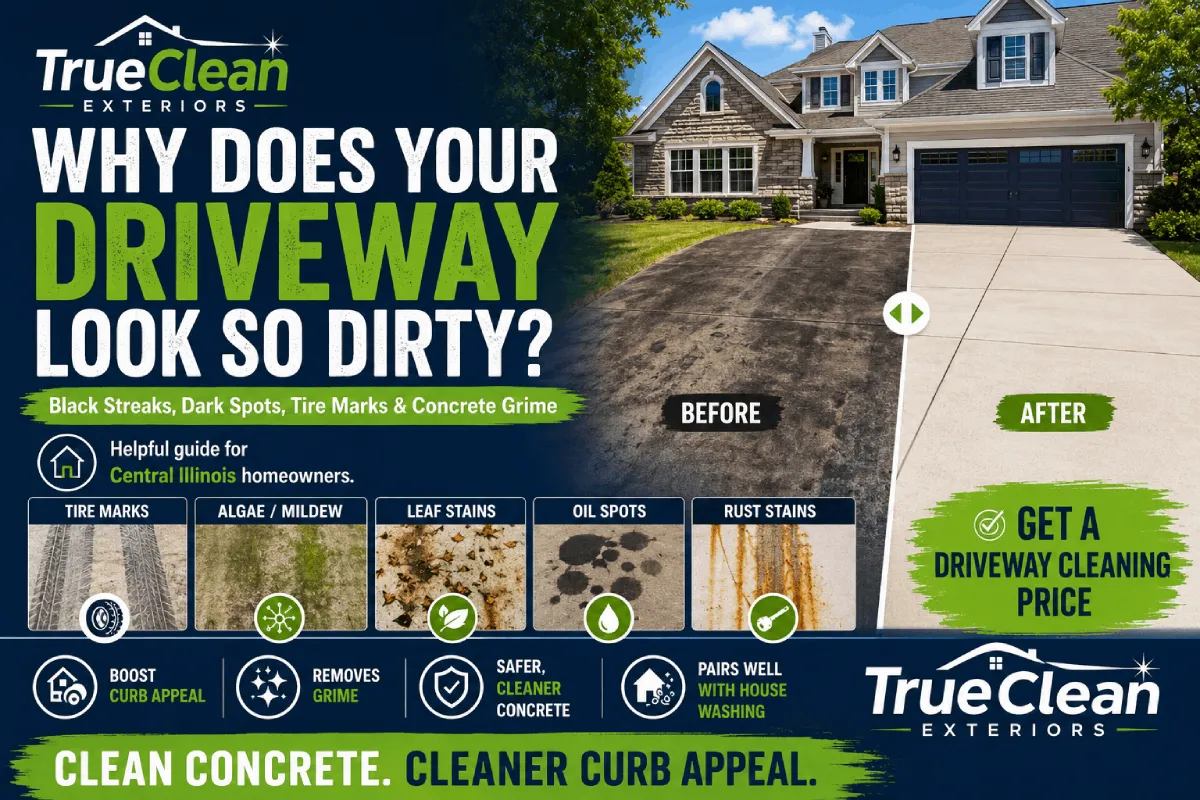
Driveway Cleaning in Central Illinois | Black Streaks & Dirty Concrete
Driveway Cleaning in Central Illinois: Black Streaks, Dark Spots & Dirty Concrete
Your driveway might be making your whole house look worse.
Rude, but true.
You can have clean siding, fresh mulch, trimmed bushes, and a nice front entry, but if the driveway is dark, streaky, stained, or covered in years of buildup, the front of the home still feels tired.
Concrete collects a lot more than people realize.
Dirt. Algae. Tire marks. Leaf stains. Rust. Oil. Winter grime. Pollen. Moisture. Random Midwest nonsense delivered seasonally with wind gusts.
The good news is that driveway cleaning can make a big visual difference.
The honest news is that not every stain disappears completely.
This guide explains why driveways get dirty, what professional cleaning can usually improve, and what homeowners should know before pressure washing concrete.
Quick Answer: Why Does My Driveway Look Dark or Stained?
Driveways usually get dark or stained because concrete is porous and exposed to everything year-round.
Common causes include:
Dirt and road grime
Tire marks
Algae and mildew
Leaf stains
Rust stains
Oil and fluid leaks
Fertilizer stains
Mulch or landscaping runoff
Winter salt and slush
Moisture sitting on shaded areas
Some driveway discoloration is surface-level and cleans up well.
Some stains soak deeper into the concrete and may improve without fully disappearing.
That is why expectations matter.
We are cleaning concrete, not reversing time with a garden hose and optimism.
Why Concrete Gets Dirty So Fast in Central Illinois
Central Illinois weather is not exactly kind to exterior surfaces.
Driveways sit outside through winter, spring rain, summer humidity, fall leaves, pollen, mud, tire traffic, and whatever gets dragged in from the street.
Concrete also has tiny pores that collect grime and moisture. That means stains and organic buildup can settle in over time.
Driveways often get dirty from:
Wet leaves sitting on the surface
Shade from trees
Water pooling in low spots
Vehicle traffic
Snow, salt, and winter slush
Grass clippings and yard debris
Mulch and soil runoff
Oil or fluid drips
Rust from metal items or irrigation
If your driveway used to look brighter and now looks dark or uneven, you are not imagining it.
Concrete ages. It collects stuff. It holds grudges.
What Are the Black Streaks on My Driveway?
Black or dark streaks on concrete are often a mix of dirt, algae, mildew, moisture, tire residue, and organic buildup.
They may show up more in shaded areas, near trees, or where water drains slowly.
Black streaks may be caused by:
Algae or mildew
Tire marks
Water runoff
Organic buildup
Dirt trapped in the concrete
Decomposing leaves
Shaded moisture
In many cases, driveway cleaning can dramatically reduce dark streaks and restore a brighter, more even appearance.
But if the streaks are from deep staining, they may improve rather than vanish completely.
What About Oil Stains?
Oil stains are different.
Fresh oil is much easier to treat than old oil that has soaked into the concrete for months or years.
A regular driveway cleaning may lighten oil stains, but deep oil spots often need specialty degreasing and may still leave a shadow.
Oil stains are affected by:
How long the oil has been there
How much oil soaked in
Whether it was treated quickly
The age and porosity of the concrete
Whether previous cleaning attempts spread it
If a company promises old oil stains will disappear completely every time, be careful.
Some oil stains are stubborn little goblins.
Can Rust Stains Be Removed from Concrete?
Rust stains may come from metal furniture, irrigation, fertilizer, tools, trailers, downspouts, or anything metal that sat on the concrete too long.
Rust often requires a specialty treatment.
A normal driveway cleaning may not fully remove it.
Rust stains may appear near:
Metal patio furniture
Trailer jacks or equipment
Downspout extensions
Sprinkler overspray
Fertilizer contact
Tools or metal containers
Garage edges or drains
Some rust stains can be treated very well.
Others need realistic expectations depending on how deep they are and how long they have been there.
Do Leaf Stains Come Out?
Often, yes.
Leaf stains and organic discoloration usually improve with proper cleaning, especially if they are not too old or deeply embedded.
Leaves can leave dark brown or black marks when they sit wet on concrete for long periods.
Leaf stains are common:
In fall
Under trees
Near landscaping
Around patios and walkways
In shaded, damp sections of concrete
If your driveway looks blotchy after leaves sat on it all season, cleaning can usually help a lot.
The sooner the better.
Wet leaves are basically nature’s temporary tattoos for concrete.
Why DIY Pressure Washing Can Leave Lines
This is a big one.
A lot of homeowners rent or buy a pressure washer, start cleaning the driveway, and end up with lines, stripes, or uneven marks.
That happens because cleaning concrete evenly takes the right tool, distance, pressure, and pattern.
A wand alone can leave “zebra stripes” if used inconsistently.
DIY driveway cleaning may leave:
Wand marks
Uneven bright and dark patches
Missed strips
Swirl marks
Lines from inconsistent distance
Surface damage from too much pressure
Professional driveway cleaning often uses a surface cleaner for more even results.
That does not automatically make every driveway perfect, but it helps avoid the “I tried my best and now my concrete has racing stripes” look.
Is Pressure Washing Safe for Concrete?
Usually, concrete can handle more pressure than siding.
But that does not mean it is impossible to damage.
Older concrete, weak surfaces, cracked areas, spalling, decorative concrete, or improperly poured sections can be more vulnerable.
Pressure washing concrete requires care around:
Cracks
Edges
Expansion joints
Spalling or flaking areas
Decorative or stamped concrete
Sealed concrete
Older, weaker surfaces
Garage doors and siding nearby
The right method depends on the condition of the concrete.
Concrete is tough.
It is not invincible.
Should You Clean the Driveway When You Wash the House?
Often, yes.
If the house is being washed and the driveway is visibly dirty, cleaning both can make the whole property look much better.
A clean house next to a dark driveway can feel unfinished.
Driveway cleaning pairs well with:
Front porch cleaning
Fence cleaning
Gutter face cleaning
If you are trying to boost curb appeal, the front-facing areas matter most.
Siding plus driveway plus walkway is usually one of the strongest curb appeal combinations.
It is the exterior cleaning version of getting a haircut and finally cleaning your shoes.
What Areas Should You Clean First?
If you are prioritizing, start with what people see from the street.
Best order for curb appeal:
Front siding
Driveway
Walkway
Front porch and steps
Garage apron
Patio or backyard concrete
Fence or other visible surfaces
You do not have to clean everything at once.
But if the driveway is one of the biggest dirty surfaces on the property, it should probably be high on the list.
How Often Should You Clean a Driveway?
Most driveways do not need to be cleaned every year unless they get dirty quickly.
A general guideline is every 1 to 3 years, depending on shade, trees, traffic, drainage, and how clean you like the property to look.
You may need driveway cleaning more often if:
Your driveway is heavily shaded
Trees drop leaves over it
It gets tire marks quickly
You have irrigation or rust issues
Water sits in low areas
You are preparing for a sale or event
You like the home to look sharp from the street
You may wait longer if the driveway stays fairly bright and does not collect much buildup.
The driveway will usually let you know.
Subtly at first.
Then aggressively from the curb.
What Should a Driveway Cleaning Quote Include?
A good quote should be clear about what is being cleaned and what stains may need extra treatment.
Ask whether the quote includes:
Entire driveway
Garage apron
Walkway
Front steps
Porch or entry area
Pretreatment for organic buildup
Specialty treatment for oil or rust
Post-treatment if needed
Water access requirements
Expected limitations
Most driveway cleaning jobs are straightforward.
But stains like oil, rust, fertilizer, and deep discoloration should be discussed upfront.
Final Thought
Driveway cleaning can make a bigger difference than homeowners expect.
Because the driveway is usually one of the largest visible surfaces at the front of the home, dark or stained concrete can drag down the whole property.
A clean driveway, clean walkway, and clean front entry can make the home feel brighter, newer, and better cared for.
Just remember:
Most dirt, algae, mildew, leaf stains, and surface grime can improve a lot.
Old oil, rust, deep stains, and damaged concrete may need special treatment or realistic expectations.
That is not bad news.
That is just concrete being concrete.
Get a Fast Driveway Cleaning Price
TrueClean Exteriors helps Central Illinois homeowners clean driveways, siding, patios, walkways, fences, and other exterior surfaces.
Want a quick ballpark?
Use our exterior cleaning calculator or request a fast quote.
You can also text SIDING to 217-290-1500 and ask about adding driveway cleaning while we are there.
FAQ's
What causes black stains on a driveway?
Black stains on driveways are often caused by dirt, algae, mildew, tire marks, wet leaves, moisture, and organic buildup. Shaded areas usually stain faster because they stay damp longer.
Can pressure washing remove oil stains from concrete?
Pressure washing may lighten oil stains, but old or deep oil stains often need specialty degreasing and may not disappear completely.
Why did my DIY driveway cleaning leave lines?
Lines or stripes usually happen when a pressure washer wand is held at inconsistent distances or moved unevenly. Professional driveway cleaning often uses a surface cleaner for a more even result.
Is pressure washing safe for concrete?
Concrete can usually handle more pressure than siding, but old, cracked, spalling, decorative, or sealed concrete needs more care.
Should I clean my driveway and siding together?
Yes, if both are visibly dirty. Cleaning siding, driveway, and walkway together usually creates a stronger curb appeal improvement than cleaning only one surface.
