Soft Washing vs. Pressure Washing Vinyl Siding | What’s Safer?
Soft Washing vs. Pressure Washing Vinyl Siding: What’s Safer?
A pressure washer is a beautiful thing.
On concrete.
On siding, it can become a very expensive mistake with a trigger.
If your vinyl siding is green, dirty, streaky, or covered in mildew, it is natural to think, “Can’t we just pressure wash it?”
Sometimes people do.
Sometimes it works.
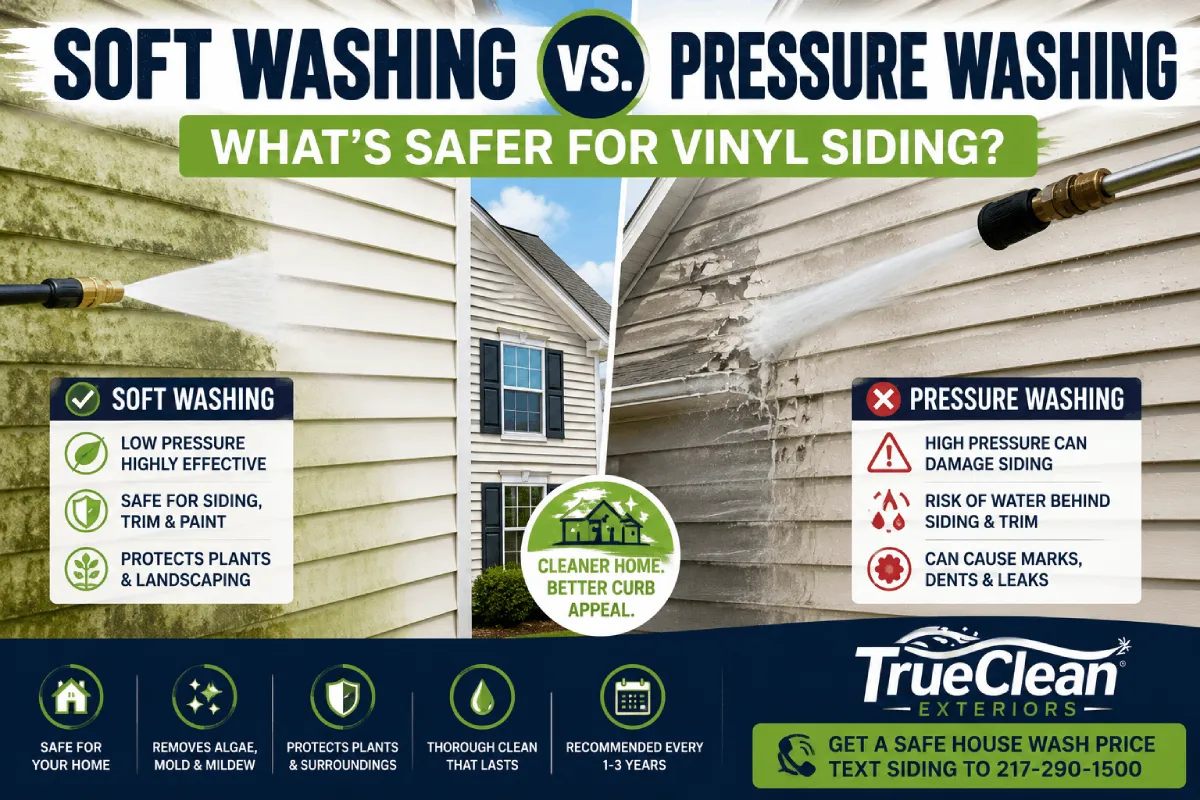
Sometimes it forces water behind the siding, leaves marks, damages trim, pushes water into window seals, or turns a simple cleaning job into a repair project.
That is why most siding should be cleaned with a softer, lower-pressure approach instead of brute force.
This guide explains the difference between soft washing and pressure washing, when each makes sense, and what Central Illinois homeowners should know before cleaning their siding.
Quick Answer: Should Vinyl Siding Be Soft Washed or Pressure Washed?
Vinyl siding is usually safer to clean with soft washing or low-pressure washing.
Pressure washing can be useful for harder surfaces like concrete, but high pressure is not usually the best choice for siding.
Soft washing uses cleaning solution and low pressure to remove algae, mildew, dirt, pollen, and organic buildup without blasting the surface.
In plain English:
Use the cleaner to do the work.
Not the water cannon.
What Is Pressure Washing?
Pressure washing uses high-pressure water to remove dirt, grime, stains, and buildup from surfaces.
It can be very effective when used on the right materials.
Pressure washing is commonly used for:
Driveways
Sidewalks
Concrete patios
Some brick or masonry surfaces
Certain hardscape areas
Durable surfaces with heavy buildup
Pressure washing is not bad.
It is just not the right answer for every surface.
A driveway and a vinyl-sided house are not the same thing. One is concrete. The other is a layered exterior system with seams, trim, windows, vents, outlets, and places where water can go if someone gets aggressive.
What Is Soft Washing?
Soft washing uses a cleaning solution to break down organic growth and dirt, then rinses the surface with lower pressure.
Instead of trying to physically blast everything off, soft washing lets the cleaner do the heavy lifting.
Soft washing is commonly used for:
Vinyl siding
Painted surfaces
Some brick and exterior walls
Trim
Soffits
Gutters
Delicate exterior surfaces
Areas with algae or mildew
Soft washing is especially useful for green siding because the issue is usually organic growth, not just dirt sitting on the surface.
If algae is growing on the siding, it needs to be treated, not just slapped around with high-pressure water until everyone feels something.
Why High Pressure Can Be Risky on Vinyl Siding
Vinyl siding is designed to shed water from rain.
It is not designed to have high-pressure water shot upward, sideways, and behind the panels.
That is the big issue.
If someone uses too much pressure or sprays at the wrong angle, water can get behind the siding or into areas it should not go.
High pressure can cause problems like:
Water forced behind siding
Leaks around windows or trim
Damage to seals or caulking
Wand marks or uneven cleaning
Oxidation streaking
Damage around light fixtures or outlets
Loose siding panels
Water intrusion around vents
Damage to painted or older surfaces
That does not mean siding can never be rinsed.
It means the pressure, angle, distance, and process matter.
Why Soft Washing Works Better for Green Siding
The green stuff on siding is usually algae, mildew, or organic growth.
Organic growth responds better to the right cleaning solution than to pressure alone.
If you only blast the surface with water, you might make it look better temporarily, but you may not treat the growth effectively.
A proper soft wash helps remove the buildup more thoroughly and safely.
Soft washing helps with:
Green algae
Mildew
Pollen
Dirt
Cobwebs
Surface grime
Shaded-side buildup
North-facing wall discoloration
The cleaner does the work. The rinse clears it away.
Much less drama.
When Pressure Washing Makes Sense
Pressure washing still has its place.
It is especially useful for hard surfaces that can handle more force.
Pressure washing may be a good fit for:
Sidewalks
Concrete walkways
Some patios
Certain brick surfaces
Durable hardscape areas
Even then, the equipment matters.
A driveway should usually be cleaned evenly with the right tools, not carved up with random wand lines like somebody was trying to write their memoir in concrete.
When Soft Washing Makes More Sense
Soft washing makes more sense when the surface is more delicate or when the buildup is organic.
Soft washing is usually better for:
Vinyl siding
Painted siding
Soffits
Fascia
Gutters
Trim
Areas around windows
Exterior walls with algae or mildew
Delicate surfaces where high pressure could cause damage
For house washing, soft washing is usually the safer default.
The goal is a clean house, not siding that has been pressure-exfoliated against its will.
What About Brick, Stucco, or Painted Surfaces?
Not every home is vinyl siding.
Some homes have brick, painted siding, stucco, stone, or mixed materials.
These surfaces need to be evaluated before cleaning because they can react differently.
Things that affect the cleaning method:
Surface material
Age of the surface
Condition of paint or sealant
Amount of buildup
Existing cracks or damage
Oxidation or fading
Nearby fixtures, windows, or landscaping
The safest answer is not always “soft wash everything” or “pressure wash everything.”
The safest answer is using the right method for each surface.
How to Tell If Someone Knows What They’re Doing
You do not have to be an exterior cleaning expert to ask smart questions.
Before hiring someone to clean your siding, ask how they plan to clean it.
If the answer is basically, “I’ll blast it,” that may not be enough.
Good questions to ask:
Do you use soft washing or high pressure on siding?
How do you protect windows, outlets, plants, and fixtures?
What surfaces are included?
What stains may not come out?
Do you clean with low pressure around siding seams?
Will you rinse plants before and after?
Is gutter face cleaning included or separate?
Are driveway and walkway cleaning separate services?
A good company should be able to explain the process without making you feel like you asked for government secrets.
Can Homeowners Soft Wash Their Own Siding?
Some homeowners can safely clean small areas themselves.
But there are a few things to be careful about.
Cleaning solutions, plants, windows, height, water flow, and rinsing all matter.
DIY may be reasonable if:
The area is small
The home is one story
The buildup is light
You can safely reach the area
You understand the cleaner you are using
You can protect plants and rinse thoroughly
Hiring a pro may be smarter if:
The house is two stories
The buildup is heavy
You have lots of landscaping
There are stains you cannot identify
You are worried about damage
You want the whole home cleaned evenly
You are preparing for a sale, party, or major cleanup
DIY can be fine.
DIY plus high pressure plus second-story siding plus questionable ladder choices?
That is where the day starts making bad decisions on your behalf.
What Should a Safe House Wash Include?
A safe house wash should be controlled, clear, and surface-appropriate.
It should not feel like someone just showed up and started spraying until the house surrendered.
A safe siding wash should include:
Evaluation of the siding and buildup
Low-pressure application when appropriate
Proper cleaning solution for organic growth
Careful attention around windows, vents, outlets, and fixtures
Plant protection and rinsing
Controlled rinse process
Clear explanation of what may not fully clean
No unnecessary high-pressure blasting on siding
The process should match the surface.
That is the whole point.
Final Thought
Pressure washing and soft washing are both useful.
They just are not interchangeable.
Pressure washing is great for many hard surfaces. Soft washing is usually the safer choice for siding and other exterior surfaces where high pressure can cause damage.
If your siding is green, dirty, or dull, the answer is probably not more pressure.
It is the right cleaning method.
A clean home should not come with damaged siding, water intrusion, or regret.
That feels like a reasonable standard.
Get a Safe Siding Wash Price
TrueClean Exteriors helps Central Illinois homeowners clean siding, driveways, patios, walkways, fences, and other exterior surfaces using the right method for the surface.
Want a fast siding wash price?
Text SIDING to 217-290-1500 or use our exterior cleaning calculator to get a quick ballpark estimate.
Common Questions
Is soft washing better than pressure washing for vinyl siding?
In most cases, yes. Soft washing uses lower pressure and cleaning solution to remove algae, mildew, dirt, and buildup without the risks that come with high-pressure blasting.
Can pressure washing damage siding?
Yes. Too much pressure or the wrong spray angle can force water behind siding, damage trim, leave marks, disturb oxidation, or create issues around windows, vents, outlets, and fixtures.
Is pressure washing ever useful?
Yes. Pressure washing is useful for harder surfaces like driveways, sidewalks, concrete patios, and some durable hardscape areas.
What removes green algae from siding?
Green algae is usually best removed with the right cleaning solution and a low-pressure rinse. The cleaner treats the organic growth, while the rinse removes the loosened buildup.
Can I soft wash my siding myself?
Small, easy-to-reach areas with light buildup may be manageable for some homeowners. Larger homes, two-story sections, heavy buildup, and areas near landscaping or fixtures are often better handled by a professional.
